
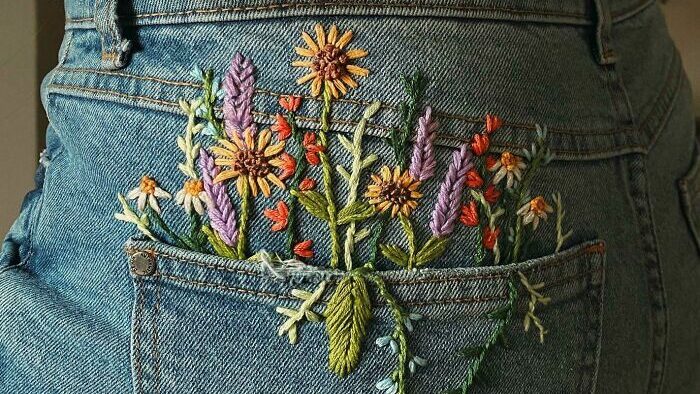
If you’ve ever gotten an embroidery quote and seen “stitch count” listed as a factor in the price, you’ve probably wondered what is stitch count in embroidery and why it matters so much to your final cost. This guide breaks down exactly what stitch count means, what makes it go up or down, and how to use that knowledge to get a design that looks great without an unexpectedly high price tag.
What Is Stitch Count in Embroidery?
Stitch count is simply the total number of individual stitches it takes to complete an embroidered design. Every satin stitch, fill stitch, and running stitch in your logo or artwork adds to that total – a small, simple design might come in at a few thousand stitches, while a large, detailed design can run well over 15,000 or 20,000.
Understanding what is stitch count in embroidery matters because it’s one of the main variables embroiderers and digitizers use to estimate both time and cost. More stitches generally mean more thread, more machine time, and more complexity – all of which show up in the final price.
Why Does Stitch Count Exist as a Pricing Factor?
Embroidery machines sew at a stitch-by-stitch pace, so the number of stitches in a design directly affects how long it takes to physically produce. A design with 5,000 stitches might take a couple of minutes to stitch out; one with 20,000 stitches could take 15–20 minutes or more, depending on the machine’s speed and the complexity of color changes.
Because production time scales with stitch count, it makes sense that pricing often does too. This is why answering what is stitch count in embroidery usually leads straight into a conversation about cost.
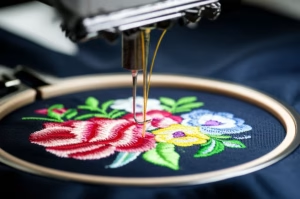
What Affects Stitch Count?
Several design choices influence how many stitches a design ends up needing:
- Size. A larger design generally needs more stitches to fill the same level of detail than a smaller version of the same artwork.
- Fill areas vs. outlines. Solid fill stitching uses far more stitches per square inch than a simple outline or running stitch.
- Stitch density. Higher density (stitches packed closer together) increases stitch count and can also affect texture and durability.
- Level of detail. Fine text, shading, gradients, and intricate shapes all add stitches compared to bold, simple designs.
- Number of colors. More color changes can mean more stops, trims, and separate stitch sections, which adds to the total.
How Stitch Count Affects Price
Now that you know what is stitch count in embroidery, here’s how it typically translates into cost:
- Per-stitch or per-thousand-stitch pricing. Some embroiderers and digitizers price based on stitch count directly – for example, a rate per 1,000 stitches.
- Machine time. Higher stitch counts take longer to produce, which affects labor and machine costs, especially for bulk orders.
- Thread usage. More stitches use more thread, which is a small but real cost factor, particularly for large production runs.
- Digitizing complexity. Designs with higher stitch counts are often more detailed to begin with, which can also increase the digitizing fee itself, separate from production cost.
This is why two logos that look similar in size on screen can come back with very different quotes – the one with more fill area, finer detail, or higher density will typically have a higher stitch count, and a higher price to match.
How to Estimate Stitch Count Before You Order
You don’t need exact numbers to get a rough sense of where your design will land. A few rules of thumb:
- Small, simple text or line art: generally low stitch count (a few thousand stitches)
- Medium logos with some fill areas: moderate stitch count (roughly 5,000–10,000 stitches)
- Large, detailed designs with heavy fill, shading, or fine detail: high stitch count (15,000+ stitches)
If you’re working with a digitizer, they can usually give you an estimated stitch count before production starts, so you know what you’re paying for ahead of time.
How to Reduce Stitch Count Without Ruining Your Design
If a quote comes back higher than expected, there are ways to bring the stitch count down without sacrificing the overall look:
- Simplify fine details that won’t read clearly at the finished size anyway
- Reduce unnecessary fill areas, using outline or lighter fill where a solid block isn’t essential
- Limit the color palette to reduce color-change stops
- Adjust density slightly, within a range that still looks clean on the fabric
- Resize thoughtfully – sometimes a slightly smaller design keeps the same visual impact with meaningfully fewer stitches
A good digitizer can usually suggest two or three of these adjustments if cost is a concern, without changing the design’s overall identity.
Does Higher Stitch Count Always Mean Better Quality?
Not necessarily. A higher stitch count often comes from more detail or larger fill areas, but it isn’t a direct measure of quality. A well-digitized design with a lower stitch count can look cleaner and more durable than a poorly digitized one with a higher count. Stitch count tells you about complexity and cost – not necessarily craftsmanship.
Frequently Asked Questions
What is a “normal” stitch count for a logo?
Most small to medium logos fall somewhere between 3,000 and 10,000 stitches, depending on detail level and size. Larger or more detailed designs can go well beyond that.
Does stitch count affect how long embroidery lasts?
Not directly, but very high density (which increases stitch count) without adequate stabilization can sometimes lead to puckering over time. A well-digitized design balances density with fabric type for both appearance and durability.
Can I ask for a stitch count estimate before ordering?
Yes – most digitizers and embroidery services can provide an estimated stitch count once they’ve seen your artwork and finished size, before committing to final pricing.
Is stitch count the same as thread usage?
They’re related but not identical. Stitch count is the number of individual stitches; thread usage (often measured in yards or meters) depends on stitch count as well as stitch length and type.
Final Thoughts
So, what is stitch count in embroidery, in simple terms? It’s the total number of stitches a design takes to complete – and it’s one of the biggest factors behind what embroidery actually costs. Understanding how size, detail, fill areas, and density all influence stitch count puts you in a much better position to manage your budget, ask the right questions, and make small design adjustments that keep both quality and price where you want them.
If you’d like an accurate stitch count and price estimate for your own design, you can send your artwork over for digitizing and get a clear breakdown before production starts.